Common Causes of Unstable Waterjet Pressure and How to Diagnose Them
One of the most common service calls we receive from waterjet owners is:
“My waterjet pressure is unstable. What could be causing it?”
Pressure fluctuation can affect cutting quality, reduce productivity, and increase wear on machine components. While many operators immediately suspect the high-pressure pump, the actual cause can come from several different areas of the machine.
In this article, we’ll look at the most common causes of unstable waterjet pressure and how to identify them before they lead to more serious downtime.
Why Stable Pressure Matters
A waterjet cutting system relies on consistent high-pressure water to produce accurate and repeatable cutting results.
When pressure becomes unstable, operators may experience:
- Rougher cut edges
- Inconsistent cutting quality
- Reduced cutting speed
- Difficulty piercing materials
- Premature wear of consumable components
Maintaining stable pressure is therefore one of the most important aspects of waterjet performance.
Does a Small Water Leak Always Mean Pressure Loss?
Not necessarily.
A common misconception is that any water leakage from the intensifier pump automatically causes pressure loss.
In reality, a small amount of water leaking from the inspection hole of a high-pressure water seal may not immediately affect cutting performance.
Many machines can continue operating normally even when minor leakage is present.
The more important indicator is often pressure stability rather than the amount of visible leakage.
Sign #1: Pressure Gauge Needle Fluctuates Significantly
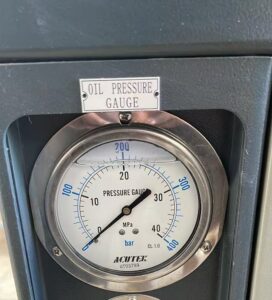
For machines equipped with an analogue pressure gauge, one of the clearest warning signs is excessive movement of the gauge needle.
Instead of remaining relatively steady during cutting, the needle may move rapidly up and down.
For machines fitted with electronic pressure monitoring systems, operators may notice pressure readings continuously changing rather than remaining stable.
This is often one of the first indicators that wear components within the high-pressure system require attention.
Cause #1: Worn High-Pressure Water Seals
High-pressure water seals are wear components found inside the intensifier assembly.
As seals wear, they become less effective at maintaining consistent pressure within the system.
Typical signs include:
- Water leakage from inspection holes
- Pressure instability
- Reduced cutting performance
- Increased pump cycling
Based on our experience, high-pressure water seals should typically be inspected around every 500 operating hours.
Actual service life will vary depending on water quality, operating pressure and maintenance practices.
Cause #2: Worn Check Valve Seals
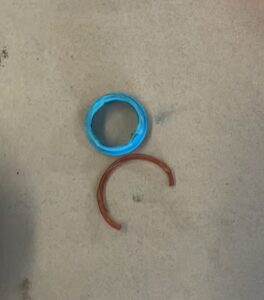
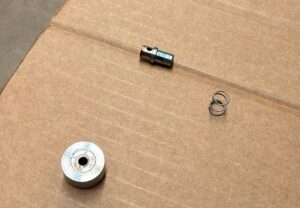
Check valves play a critical role in controlling water flow through the intensifier system.
As check valve seals wear, the pump may struggle to maintain consistent pressure and efficiency.
A common misconception is that seal failure will always result in visible leakage.
In reality, this is not always the case.
Particularly with check valve seals, we often encounter situations where no obvious leakage is present, yet the seal has already deteriorated.
One practical field check is to carefully monitor the temperature of surrounding components.
If the components around the check valve become noticeably hotter than normal during operation, this may indicate excessive internal leakage or seal wear within the valve assembly.
Typical symptoms of worn check valve seals include:
- Pressure fluctuations
- Reduced cutting performance
- Increased operating temperature around the check valve assembly
- Slower pressure build-up
- Reduced pump efficiency
Because these symptoms can develop gradually, regular inspection is often more effective than waiting for visible leakage to appear.
Cause #3: Worn Orifice or Other High-Pressure Components
Many operators focus solely on pump components while overlooking the cutting head.
A worn or damaged orifice can affect water flow characteristics and contribute to performance issues.
If pressure problems appear after a long period of operation, inspecting the orifice and other consumable components should be part of the troubleshooting process.
Regular replacement of wear parts helps maintain stable cutting performance.
Cause #4: Hydraulic System Problems
Not all pressure fluctuation issues originate from the water side of the machine.
Hydraulic system faults can also produce unstable pressure readings.
Potential causes include:
- Hydraulic pump wear
- Faulty hydraulic valves
- Accumulator issues
- Hydraulic pressure control problems
Because the intensifier relies on hydraulic power to generate ultra-high-pressure water, any instability within the hydraulic system can affect cutting pressure.
Cause #5: Electrical or Control System Issues
Modern waterjet systems use sensors and electronic control components to monitor and regulate pressure.
Problems may occur due to:
- Faulty pressure transducers
- Damaged wiring
- Electrical connection issues
- PLC control faults
In some cases, pressure readings may appear unstable even though the pump itself is functioning correctly.
Proper diagnosis is essential before replacing mechanical components.
Common Symptoms and Possible Causes
| Symptom | Possible Cause |
|---|---|
| Small water leak from inspection hole | High-pressure seal wear |
| Large water leak | Seal failure requiring immediate attention |
| Pressure gauge fluctuating | High-pressure wear components, check valves, hydraulic issues |
| Electronic pressure reading unstable | High-pressure system, hydraulic system or electrical components |
| Reduced cutting performance | Pressure instability, worn consumables, pump wear |
| Hydraulic oil leak | Low-pressure seal wear or hydraulic component issues |
A Seal Does Not Always Leak When It Fails
Many operators assume that a seal is still in good condition as long as no water is leaking from the system.
Unfortunately, this is not always true.
In some cases, particularly with check valve seals, the first signs of wear may appear as:
- Pressure instability
- Reduced cutting performance
- Abnormal component temperatures
rather than visible leakage.
For this reason, relying solely on leaks as an indicator of seal condition may result in maintenance being delayed longer than it should be.
A combination of pressure monitoring, temperature observation and routine inspection generally provides a much more reliable indication of component condition.
One Common Maintenance Mistake
A mistake we frequently encounter during pump maintenance is incorrect seal installation.
Many waterjet seals are directional and must be installed in the correct orientation.
Installing seals incorrectly can result in:
- Immediate leakage
- Premature seal failure
- Pressure instability
- Additional maintenance costs
Always verify installation direction and follow the manufacturer’s maintenance procedures carefully.
How We Approach Pressure Fluctuation Diagnosis
When investigating pressure instability, we generally recommend starting with the simplest checks first:
- Inspect the orifice and consumables.
- Check for water leakage from inspection holes.
- Inspect high-pressure water seals.
- Check check valves and associated seals.
- Inspect the hydraulic system.
- Verify pressure sensors and electrical components.
This systematic approach often identifies the root cause quickly and avoids unnecessary replacement of expensive components.
Final Thoughts
Pressure fluctuation is one of the most common waterjet maintenance issues, but it does not always indicate a major pump failure.
While worn high-pressure water seals and check valve seals are common causes, hydraulic and electrical system faults can produce similar symptoms.
The key is to diagnose the problem methodically rather than replacing parts based on assumptions.
Regular inspection of wear components, monitoring pressure stability and addressing minor issues early can significantly reduce downtime and help keep your waterjet system operating reliably.
If you require waterjet spare parts, pump maintenance support or technical assistance, feel free to contact our team.